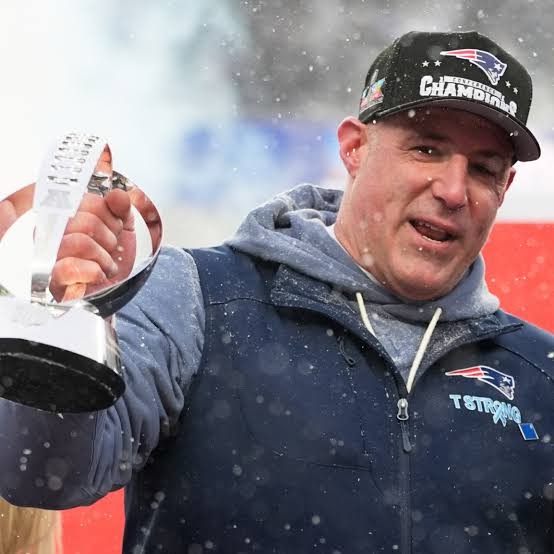
AP Photo/John Locher
In the modern NFL, where front offices obsess over draft capital and “roster building” is often treated like a math equation, Mike Vrabel stands as the definitive proof that a head coach is the ultimate force multiplier.
While general managers provide the ingredients, the head coach is the one who determines whether those ingredients become a championship-caliber meal or a disjointed mess. Vrabel’s career, particularly his transformational tenure with the Tennessee Titans and his immediate impact on the New England Patriots in 2025, demonstrates that the “right” coach doesn’t just manage talent—he creates it.
The evidence of Vrabel’s value is his ability to win with and without a conventional superstar at the most important position on the field, quarterback. Most modern coaching successes are inextricably linked to elite quarterback play; it is easy to look like a genius when Patrick Mahomes or Josh Allen is erasing your mistakes.
Vrabel, however, spent his years in Tennessee turning “bridge” quarterbacks and mid-round picks into winners. He took Ryan Tannehill, a player widely considered a draft bust in Miami, and maximized a system that focused on a physical identity and situational mastery. Under Vrabel, the Titans didn’t just survive; they thrived, eventually clinching the AFC’s No. 1 seed in 2021.
That 2021 season is perhaps the greatest single-season coaching performance in the history of the league. The Titans used 91 different players that year due to a catastrophic string of injuries—an NFL record for a non-strike season. In a league where losing a star running back like Derrick Henry or a primary receiver like A.J. Brown usually grounds an offense, Vrabel’s “next man up” philosophy wasn’t just a cliché; it was a weekly reality. He squeezed production out of practice squad elevations and veteran castoffs because his culture of accountability and preparation was so deeply embedded that the specific names on the jerseys became secondary to the standard of the program.
The “Vrabel Effect” is also seen in the immediate vacuum left behind when the right coach is removed. After the Titans moved on from him following the 2023 season, the franchise didn’t just lose games; it lost its identity. The toughness and late-game poise that had defined Tennessee for half a decade evaporated.
Conversely, when Vrabel returned to New England as head coach in 2025, he inherited a team that had finished with back-to-back 4-13 seasons. Within months, he had orchestrated one of the most dramatic turnarounds in league history, leading the Patriots to an eight-game winning streak and a 14 win season. He didn’t wait for a five-year rebuild; he simply instilled a “winner’s posture” and demanded immediate execution. The end result, a return to the Super Bowl for a franchise and fanbase that made Super Bowl plans yearly.
Great coaching is about more than just X’s and O’s; it is about the psychological make up of a locker room. Vrabel’s background as a three-time Super Bowl champion player gives him a brand of credibility that cannot be manufactured. He understands the fine line between being a “player’s coach” and a disciplinarian.
He is also famous for his “situational awareness” drills—teaching players the obscure rules and clock-management nuances that often decide games. The emphasis on situational football has paid dividends as we saw on Sunday when called a last second timeout to set up a field and then substituted late, forcing the Broncos to rush their substitution which consequently forced Jarrett Stidham into throwing an interception to seal the game.
Vrabel proves that the head coach is the soul of the franchise. You can have the best analytics department and the highest-paid roster, but without a leader who can galvanize 53 men into a singular, resilient unit, you are merely a collection of expensive parts.
Vrabel’s ability to walk into a struggling building and immediately raise the “floor” of the entire organization is why he remains the gold standard for what a head coaching hire should be.