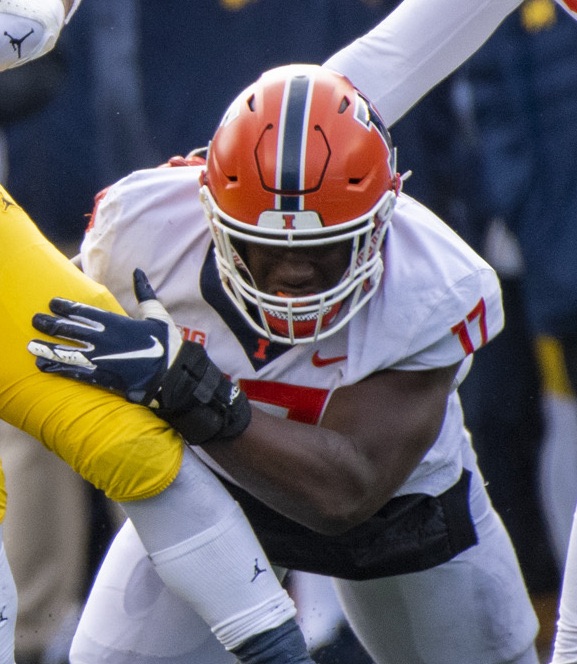
Courtesy of Illinois University
The New England Patriots took a calculated, aggressive gamble during the 2026 NFL Draft when they packaged multiple draft assets to slide up to the 55th overall pick for Illinois edge rusher Gabe Jacas. He was billed as the quintessential Mike Vrabel defender: powerful, violent at the point of attack, and boasting a decorated collegiate résumé featuring twenty-seven career sacks.
Yet, as the calendar trickles deep into June, that high-value investment is frozen in place. Jacas remains the only unsigned second-round draft pick in the entire National Football League, trapped in a modern-day contract stalemate that threatens to derail his development before he even puts on a padded practice jersey in Foxborough.
The standoff hinges on a complex web of medical concerns and team protection. Reports indicate that Jacas underwent a post-draft knee procedure, which compounded pre-existing pre-draft medical flags including a torn shoulder labrum and a foot stress fracture. Because of these overlapping issues, the Patriots have reportedly withheld the customary “participation agreement” that typically allows unsigned rookies to safely practice during the spring without risking their contract guarantees.
By protecting their financial liabilities, the front office has unintentionally created a developmental vacuum. Without that agreement, Jacas has been an isolated observer, missing crucial physical reps during voluntary workouts, OTA sessions, and mandatory minicamp.
For an incoming rookie, missing an entire offseason program under a demanding coaching staff is a catastrophic disadvantage. The transition from the Big Ten to the professional ranks requires more than just raw, athletic muscle. It demands an intimate, instinctual grasp of complex defensive alignments, coverage hand-offs, and sophisticated protection adjustments. By missing the spring installation periods, Jacas is already staring down a steep learning curve. If this contract impasse stretches any closer to the launch of training camp, the physical and mental deficit will become virtually insurmountable for a first-year player.
The timing is equally problematic for a Patriots defense that desperately needs an immediate influx of edge-rushing depth. With veteran Harold Landry absent during portions of the spring and the remaining depth chart looking remarkably thin, the runway was perfectly clear for Jacas to claim a definitive, high-impact role on the outside. His elite collegiate production and relentless motor made him the ideal candidate to inject life into the team’s pass-rush packages right away. Instead, the longer he sits without a signature on the dotted line, the more likely it becomes that his rookie campaign will devolve into a traditional “redshirt” year spent playing catch-up in the training room and film theater.
Resolving this contract dispute is no longer just a routine piece of offseason business; it is an urgent necessity for both player and club. The Patriots did not surrender draft capital just to watch a premium second-round pick spend his summer negotiating language regarding injury protections. For Jacas to maximize his immense potential and reward New England’s faith, he needs to be on the field competing. If the two sides cannot bridge the gap and finalize this contract immediately, the physical toll of his injuries combined with the mental toll of missed time will completely waste his rookie year.