Getty Images
FOXBOROUGH – When the Patriots took the field against the Las Vegas Raiders without their top two starting cornerbacks, Christian Gonzalez and Carlton Davis III, conventional wisdom suggested the secondary would be ripe for exploitation.
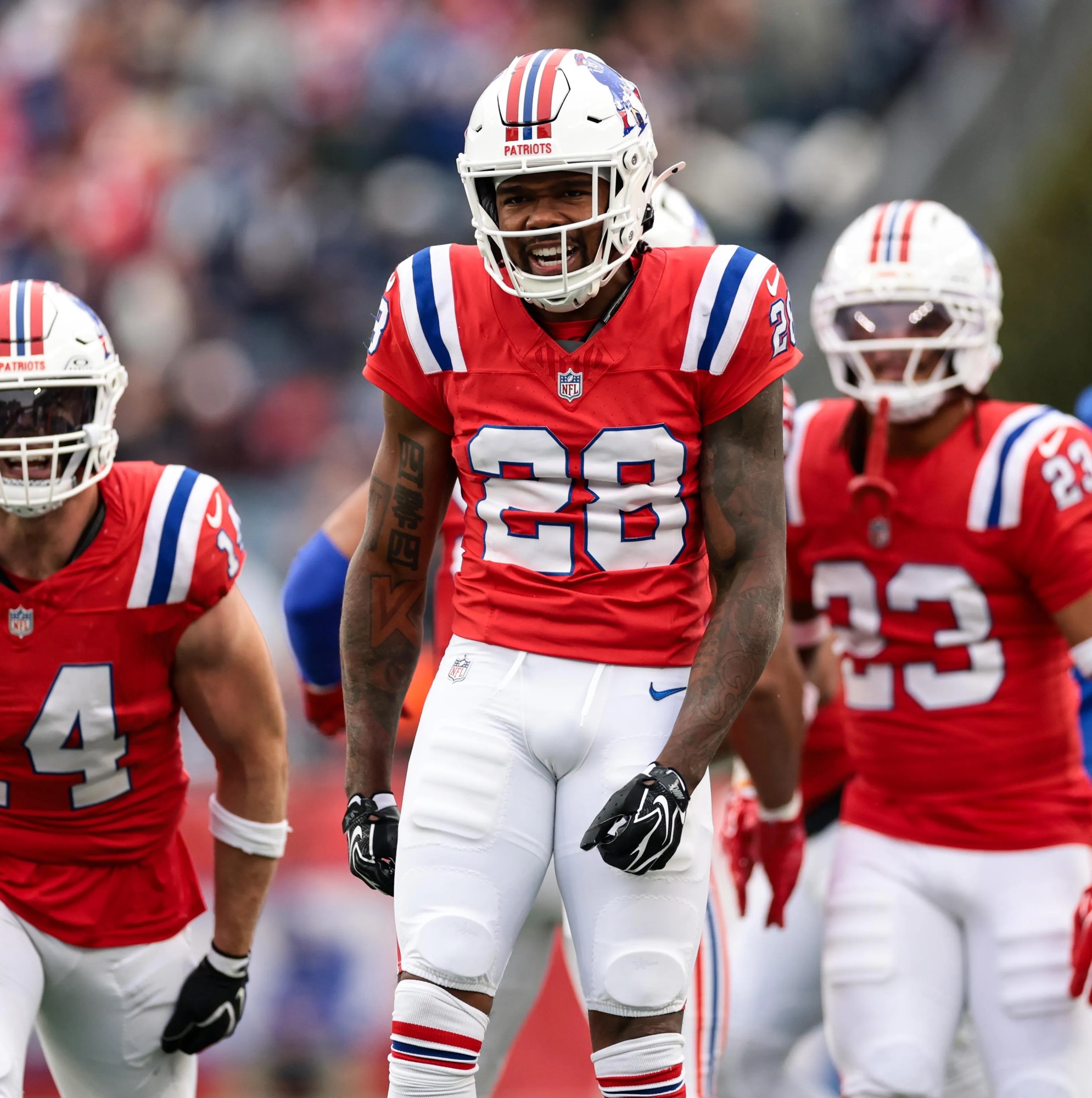
Instead, the Patriots defensive unit put on a masterclass in team defense, playing seamlessly “connected” across all three levels to fuel a 45-17 blowout victory at Gillette Stadium.
The essence of playing connected lies in how one unit compensates for another. Knowing the back end was severely depleted, the Patriots’ front seven took it upon themselves to alleviate the pressure on reserve defensive backs Kindle Vildor, Marcus Jones, and Charles Woods. Up front, New England relentlessly constricted the pocket, pressuring Raiders quarterback Kirk Cousins on nearly half of his drop-backs. By forcing rapid decisions and unsettling the veteran signal-caller, the pass rush bought crucial time and breathing room for the patchwork secondary.
Defensive tackle Milton Williams explained how the defensive line embraced that responsibility to keep the defense tethered together.
“We’re down four guys in the secondary, so they put it on us to try to affect the quarterback a little bit more. I feel like we did that to them. Kirk is kind of like Aaron Rodgers—they have computers in their head. They process information really fast and try to get the ball out. So, I’m just trying to win as fast as we can, affect the middle of the pocket, and try to get them to hesitate on some of these throws.”
Linebacker Robert Spillane talked about how well the unit played as one on Sunday.
“It says we’re really well-connected. We trust each other as a team. We trust whoever’s on the field to do their job. They’re one-eleventh, and like I said, we had a bunch of guys step up and really provide huge plays for us. Kindle [Vildor] getting that ball out on the turnover, solidifying the game. I just thought that overall, so many guys stepped in today and really did a good job for us.”
Behind that relentless four-man rush, the backup cornerbacks stepped up in complete lockstep. Rather than playing timidly, the secondary executed their assignments with confidence, tightening coverage on short routes, forcing a turnover, and keeping Las Vegas’s wideouts contained. Veteran nickel corner Marcus Jones highlighted the trust that allowed the unit to function so seamlessly, noting, “It’s great, man. When it comes down to it, we know all those guys prepare like starters. So, those guys just took advantage of the opportunity.”
That shared standard of excellence and mental connection is precisely what head coach Mike Vrabel preaches in the locker room. Addressing his team after handing out a game ball to Vildor, Vrabel lauded the depth players for upholding the defensive identity regardless of who is on the field.
” You did exactly what we expected. We have high expectations for this group, whoever’s out there, it doesn’t matter. There’s a standard, there’s an identity.” Later, Vrabel emphasized that the triumph was a direct reflection of the players’ trust in one another and their preparation, saying, “That’s what it has to be. They realize when you get an opportunity, you do… I think all the credit goes to the players. They understand the game plan and try to get ready, but ultimately, that’s what they expect of themselves.”
By pairing the front-seven rush with disciplined coverage in the back end, the Patriots proved that true defensive cohesion isn’t about individual star power. It is about eleven players moving as a single, connected entity—a formula that turned a potential liability into a dominant 28-point victory.